
Working together for a new beginning in Syria
From private individuals and civil society players to municipal actors, researchers and entrepreneurs, there are many people in Germany who wish to contribute to Syria’s reconstruction process and help build a peaceful future for the country. The German Federal Ministry for Economic Cooperation and Development (BMZ) has established a platform called ‘A New Beginning for Syria’ to bring all these stakeholders together.
About the platform
‘A New Beginning for Syria’ is a platform set up by BMZ. It is aimed at individuals, organisations and initiatives looking to contribute to Syria’s reconstruction process and help build a peaceful future for the country. The main focus is on non-governmental actors based in Germany, including private individuals, diaspora organisations, civil society players, municipalities, researchers, businesses and experts from a range of sectors.
Reem Alabali Radovan, Federal Minister for Economic Cooperation and Development, welcomes you to the 'A New Beginning for Syria' platform (german only).
The platform provides a forum for these actors to network, share information, discuss technical matters and get to know each other. It pools relevant information, raises the profile of work being done to support Syria and gets people with similar interests and concerns talking to one another. Our services currently reach over 1,900 committed individuals (as at August 2026).
Call for Proposals
Spotlight on Diaspora-Engagement


Inform, exchange and networking

Are you looking for contacts, organisations or like-minded individuals to support your activities in Syria?
Register with the partner pool on the platform to be listed as an individual, organisation or business in our networking service.

Do you want to be kept informed about networking events, funding opportunities and other events related to Syria’s reconstruction process?
Subscribe to our informative newsletter to receive regular email updates.
Photo exhibition: ‘Building bridges for Syria’s future’
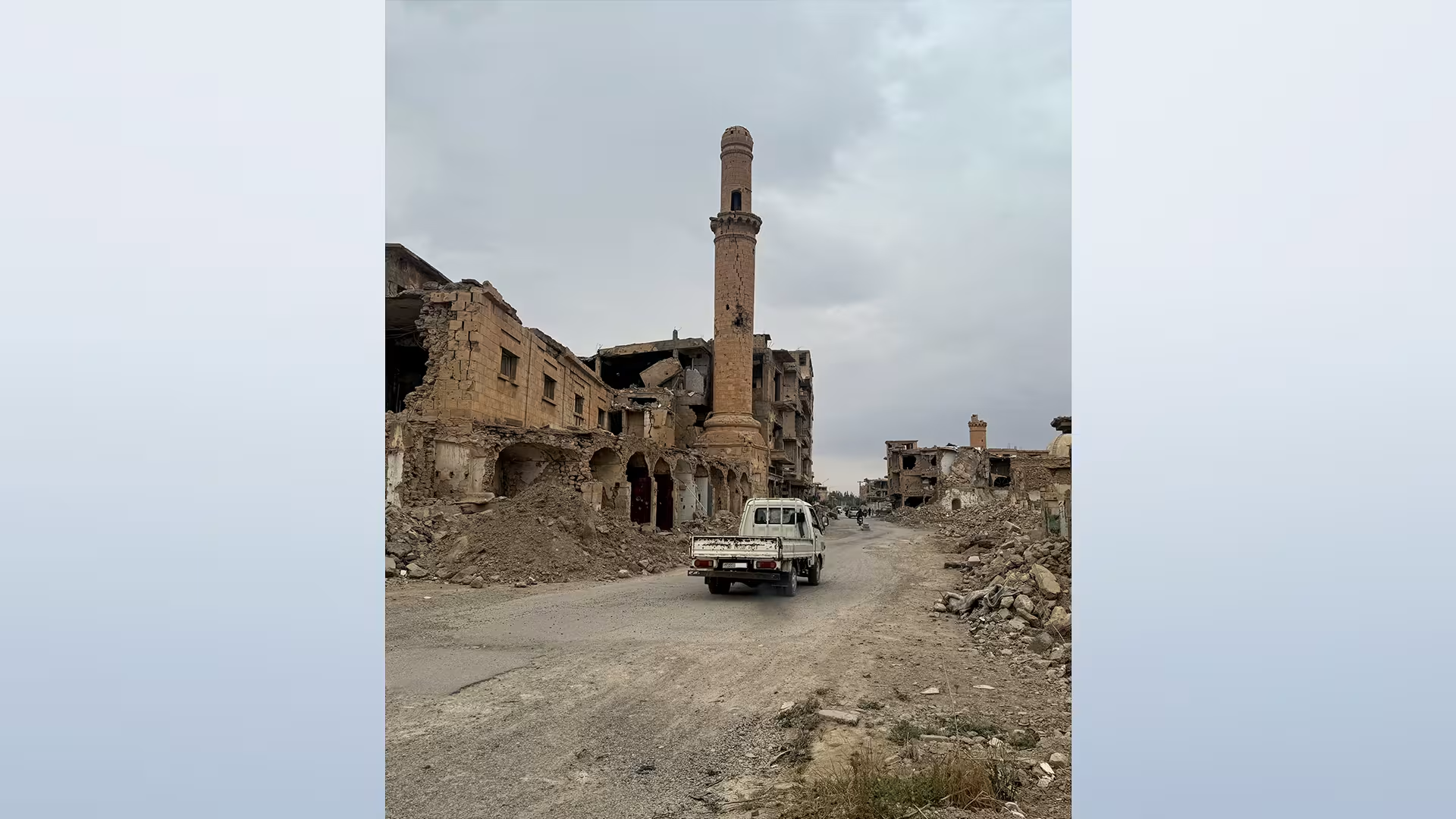
Al-Omari Mosque in Deir ez-Zor – A Witness to History (5 May 2025)
The photograph depicts the historic Al-Omari Mosque in Deir ez-Zor, surrounded by destroyed buildings and the remnants of war. Standing alone, the silhouette of its minaret rises from the devastated landscape, evoking history, faith and cultural identity. Empty streets, rubble and damaged buildings bear visible traces of conflict, while the mosque stands as a silent witness to the past, to loss and to hope. As a Syrian-German who was forced to leave his hometown in 2014 and returned nearly eleven years later, I associate this place with a profound sense of hope, but also with deep pain. For me, this image is more than a document of destruction. It is an expression of memory and identity, and of the inner tension between loss and longing for a new beginning.
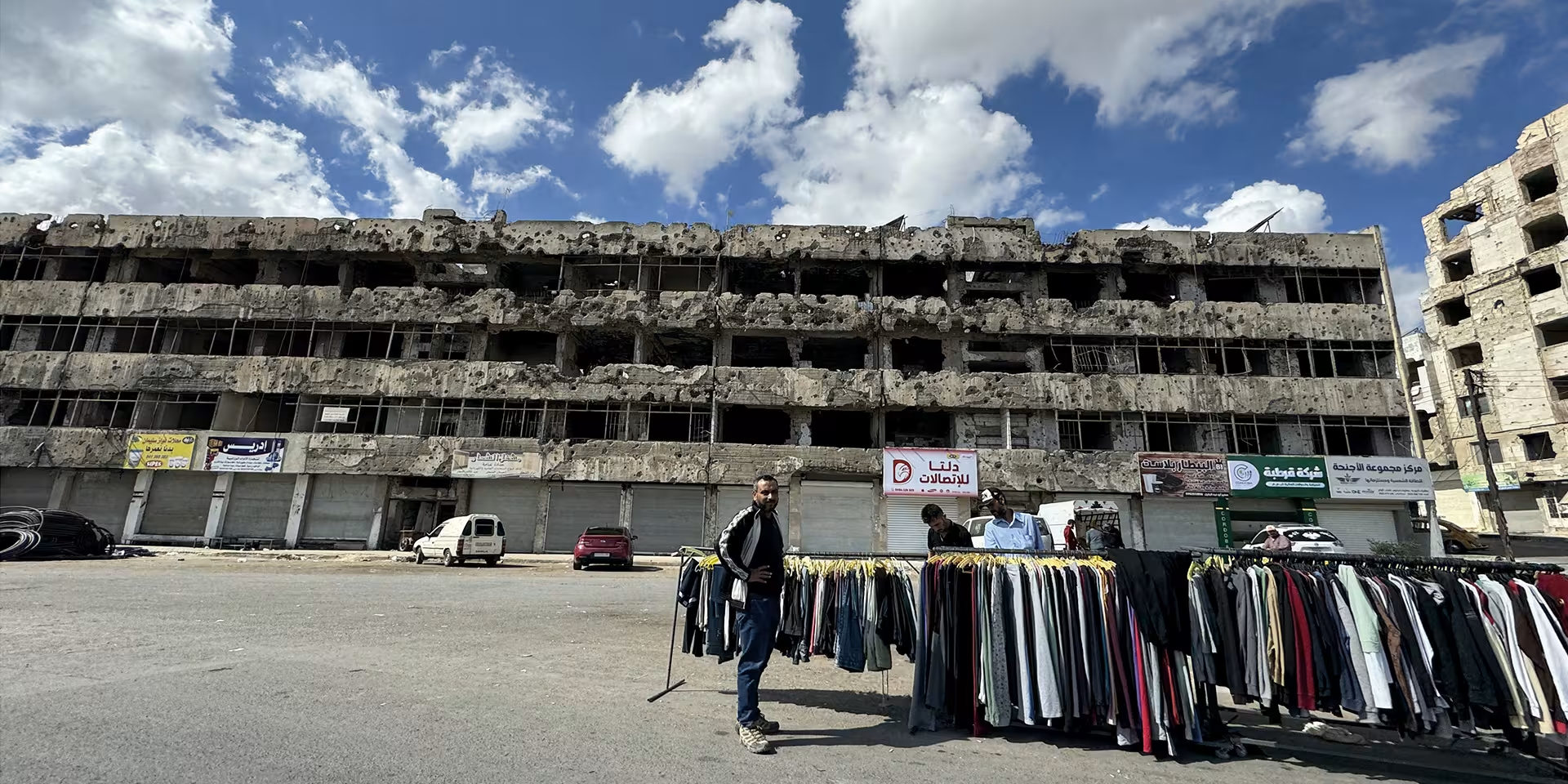
Homs in October 2025 (10 October 2025)
In front of a war-damaged house in Homs, vendors sell second-hand clothing—a scene of everyday life amid the ruins. People browse, trade and talk to one another, offering a quiet sign of hope that life and economic activity can return despite the destruction.The photograph was taken during a trip through Syria to assess the security situation, conducted by Andreas Radelbauer of the Munich-based company Corporate Trust. Such visits provide valuable insights into the realities of reconstruction and the situation of the civilian population.
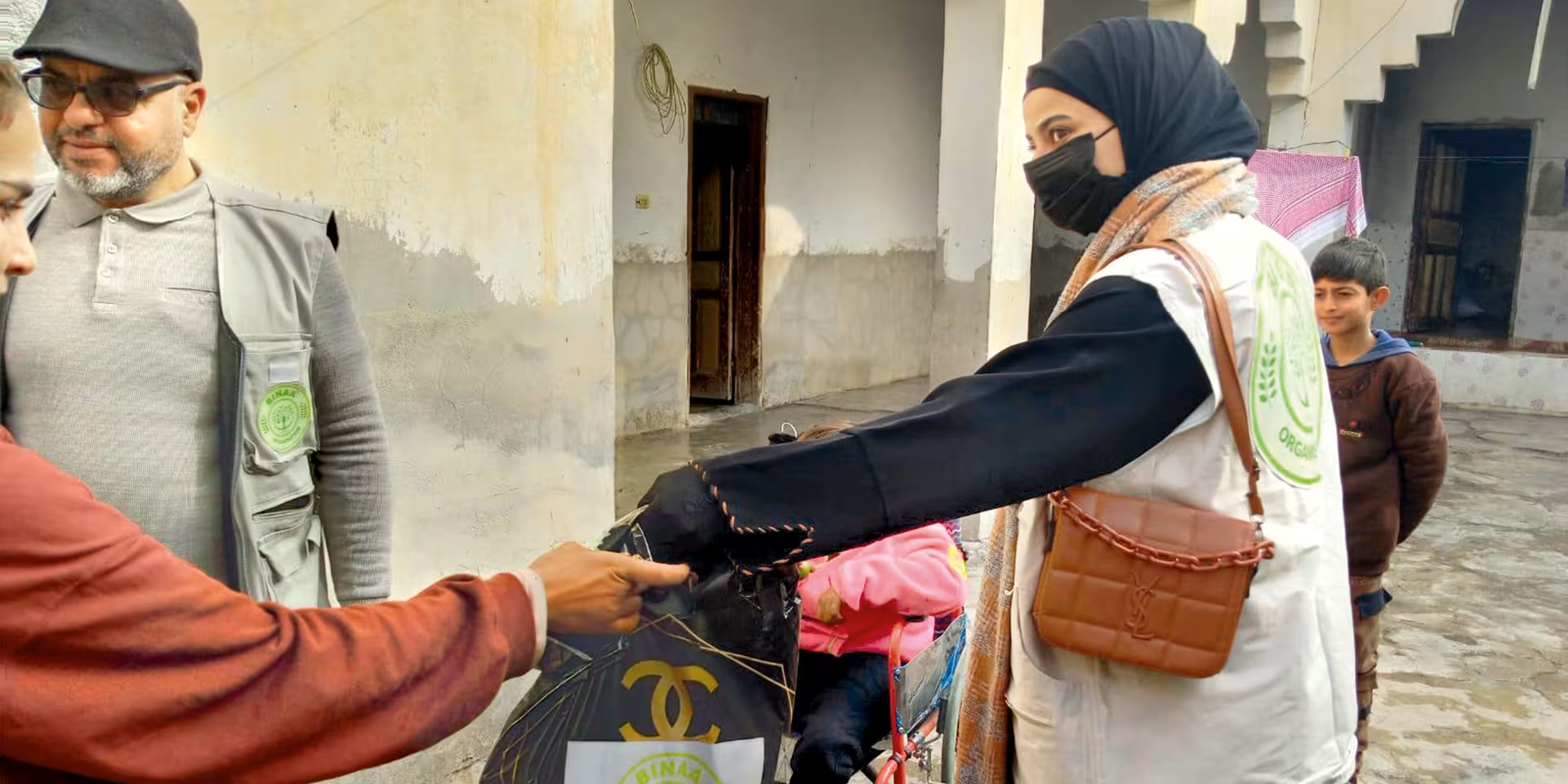
Winter Clothing for Children with Special Needs (26 December 2025)
The photograph shows volunteers from BINAA e.V. distributing winter clothing to children with special needs in northern Syria. In an environment shaped by ongoing crises, this moment represents solidarity, dignity and practical support. The project, “Winter Clothing for Children with Special Needs,” was made possible through the commitment of the Syrian diaspora in Germany. It represents a commitment to inclusion and equal opportunities, while demonstrating how practical support can build bridges between Germany and Syria. At its heart is the goal of strengthening particularly vulnerable children and helping them live with greater dignity, security and opportunity.
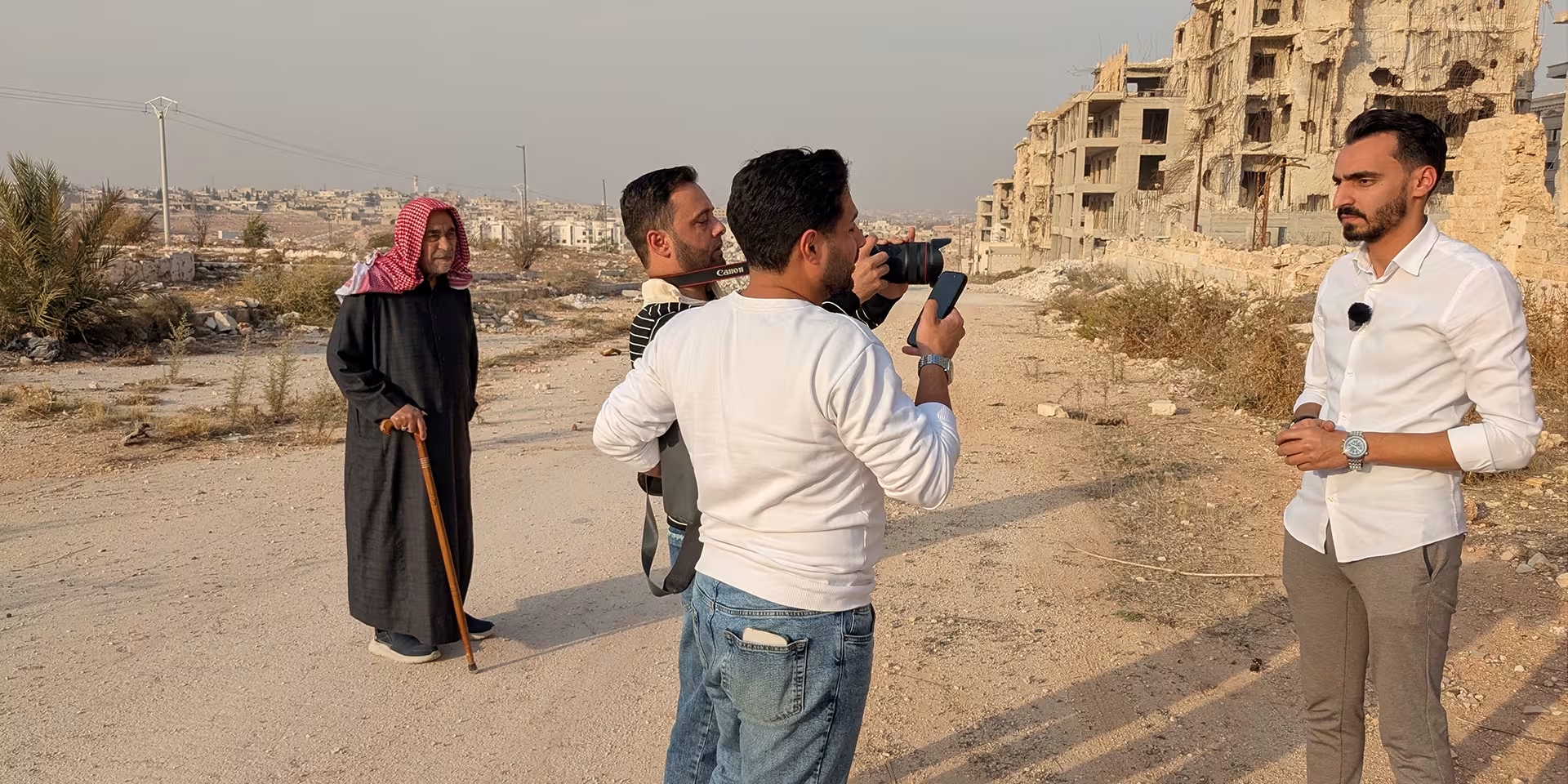
Aleppo Between Tradition and Reconstruction (10 November 2025)
Omar Halima, a construction drafter from Aleppo who now lives in Mainz, presented his plans for the reconstruction of his hometown in an interview with the Deutsche Welle team. He is a co-developer of RE.CK, a sustainable building material made from recycled rubble. The rubble is processed into durable building blocks for new construction, using sustainable, locally available binders such as ash, clay and earth. The on-site production process requires neither cement nor reinforcement or mortar, making it a resource-efficient approach to reconstruction. The initiative, led by Robins Places gGmbH, is working with Syrian construction companies on the ground to build a five-storey residential building with office space—envisioned as a “House of Hope.”
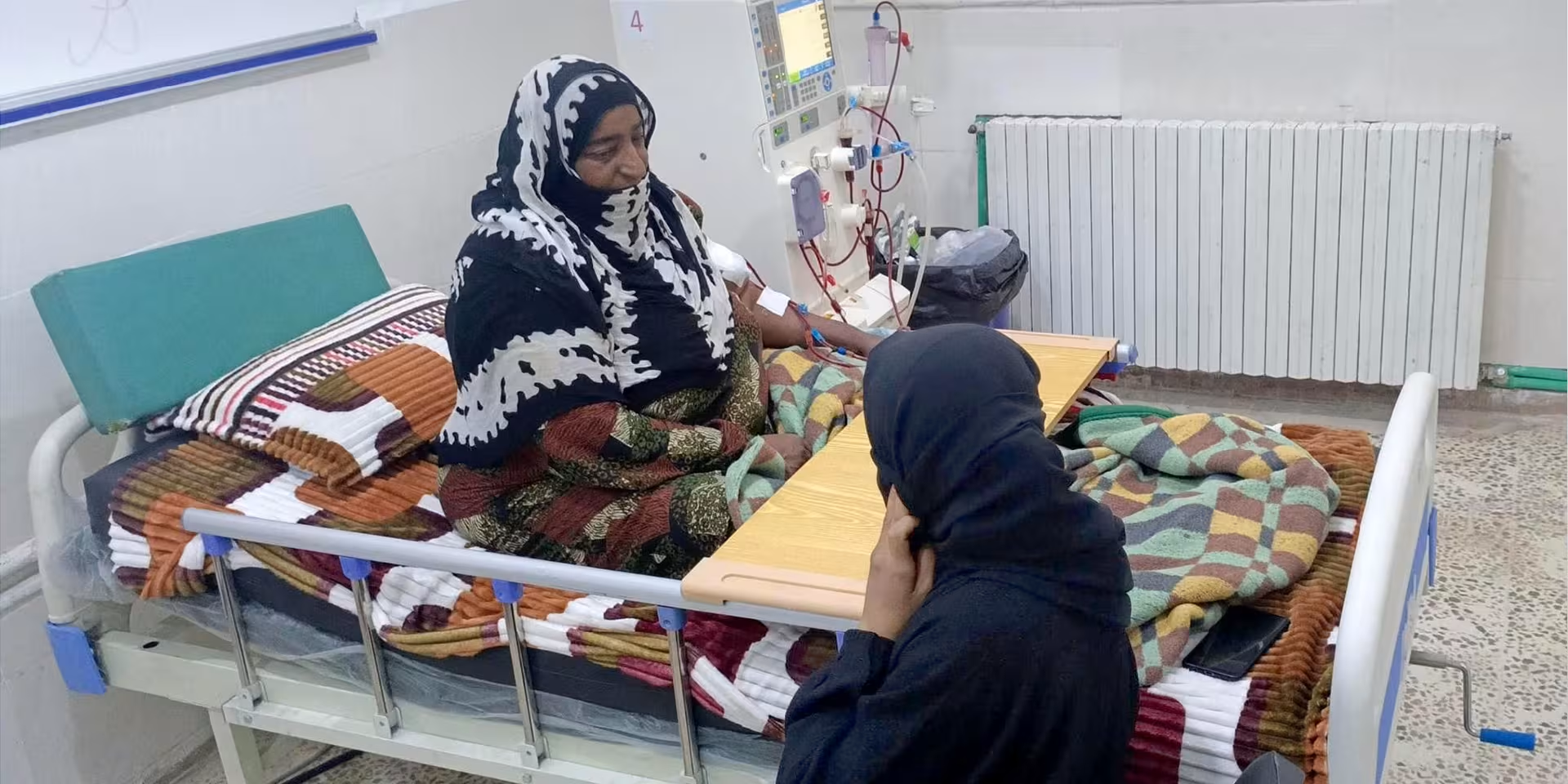
New Dialysis Machines and Beds for the Dialysis Department at Dêrik Hospital (3 July 2025)
The photograph shows one of the 38 dialysis patients at the hospital in Dêrik, northeastern Syria. As part of the GIZ hospital partnership project, three new dialysis machines and four patient beds were purchased to strengthen the hospital’s dialysis services.The project also includes training and continuing professional development for nursing staff and physicians at the hospital, as well as further training opportunities for students at Rojava University. Together, these measures aim to strengthen both the hospital’s infrastructure and the skills of local healthcare professionals, contributing to more sustainable and accessible healthcare for patients in the region.
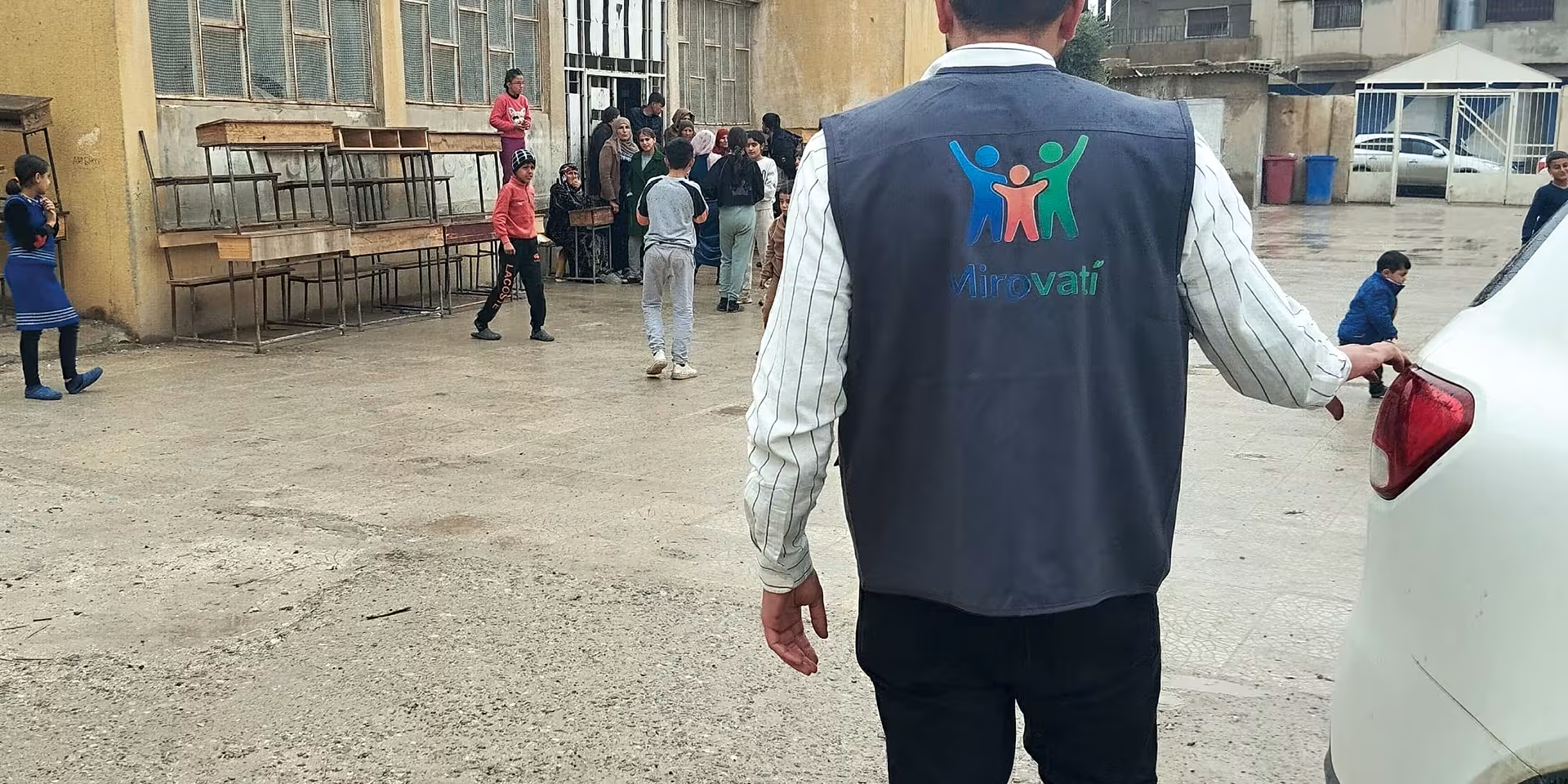
Humanity Matters in Difficult Times (3 February 2026)
As part of the Merovati Initiative, a humanitarian campaign was launched to support Kurdish families displaced from Aleppo who are currently staying in schools in Rmeilan, northeastern Syria. The campaign provides essential assistance in the form of food packages and financial support for each family. The initiative was organised by Zammen in collaboration with German and Syrian volunteers based in Germany. In a difficult and uncertain environment, the campaign reflects the importance of solidarity and humanitarian action, while demonstrating how civil society engagement across borders can provide practical support to people in need.
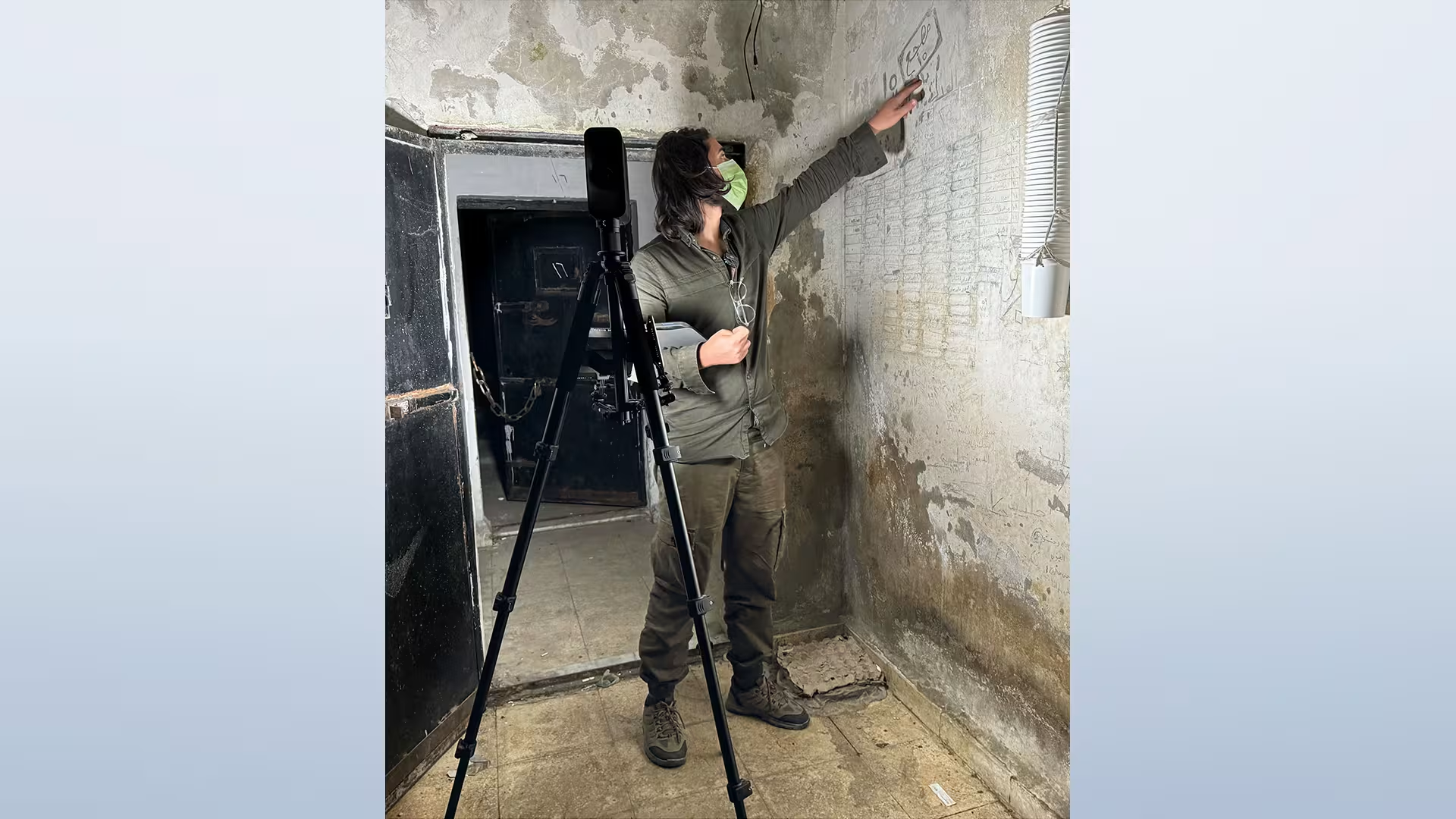
The Digitally Reconstructed Sednaya Prison Presented in Damascus (17 March 2025)
A member of the investigative team from Prisons Museum examines traces left on the walls by former prisoners of Sednaya Prison in Damascus. More than 100,000 people—and according to some estimates, as many as 200,000 or more—disappeared without a trace in the prisons of the Assad regime. Hundreds of thousands of family members are still waiting for answers, hoping for any final sign of a loved one that might allow them to find closure and begin to grieve. The NGO Prisons Museum creates virtual reconstructions of prisons to help shed light on the fate of those who disappeared, support legal proceedings and contribute to establishing a culture of remembrance. Its underlying conviction is clear: Syria cannot build a peaceful future without confronting and coming to terms with its violent past.
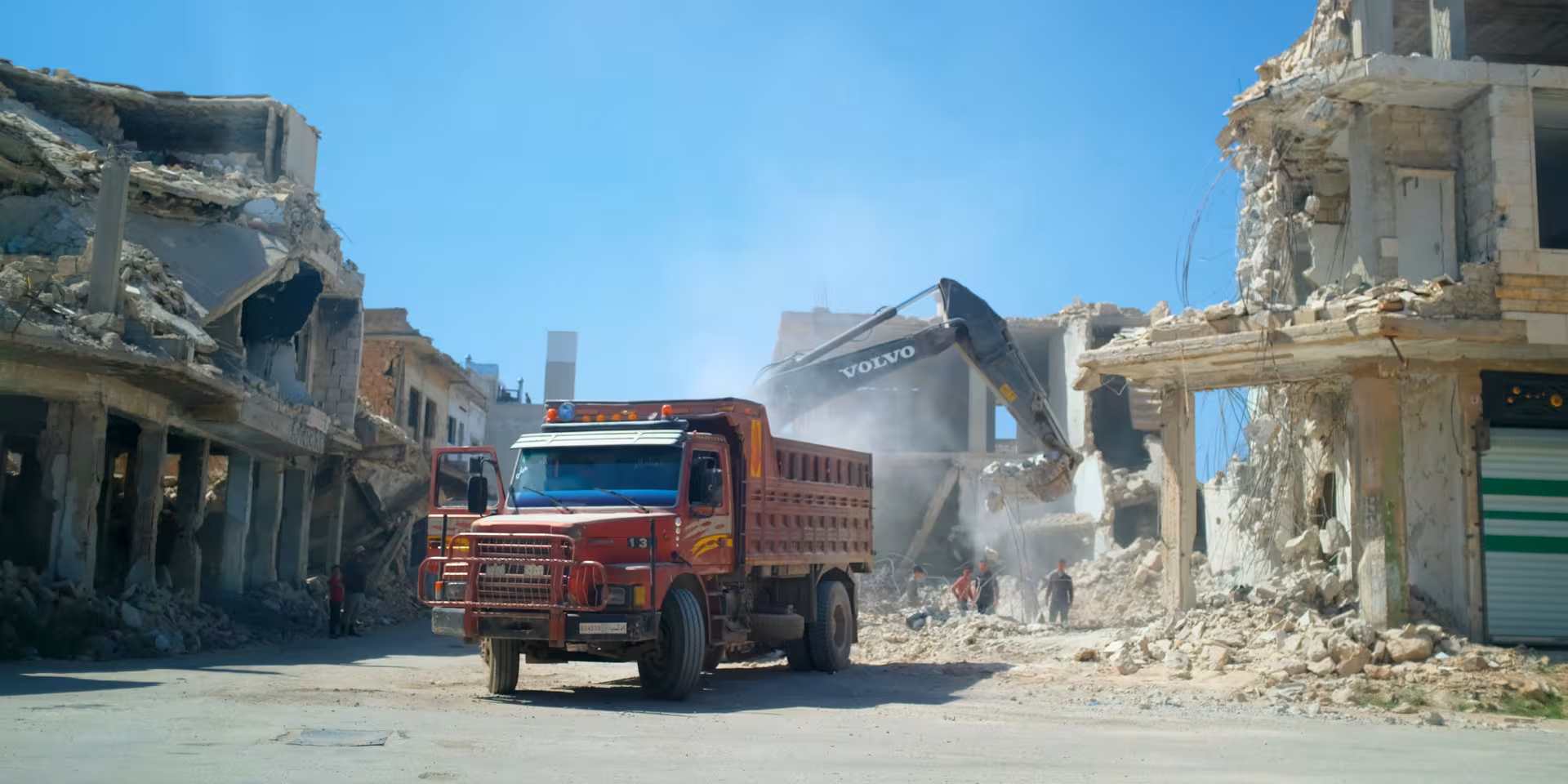
Reconstruction (5 October 2025)
Driving through the city of Saraqib, past collapsed buildings and destroyed roads, small signs of life can still be found among the ruins: a tiny vegetable shop reopening its doors, construction workers clearing rubble from what was once a home. The determination to rebuild is evident, as is the strong desire to return—particularly in a place where people’s connection to their land runs deep. Yet the reality remains harsh. Reconstruction requires more than hope; it demands resources that are scarce and infrastructure that has largely disappeared. In a world where material resources and power shape what is possible, the painful gap between the will to rebuild and the capacity to do so becomes all too apparent.
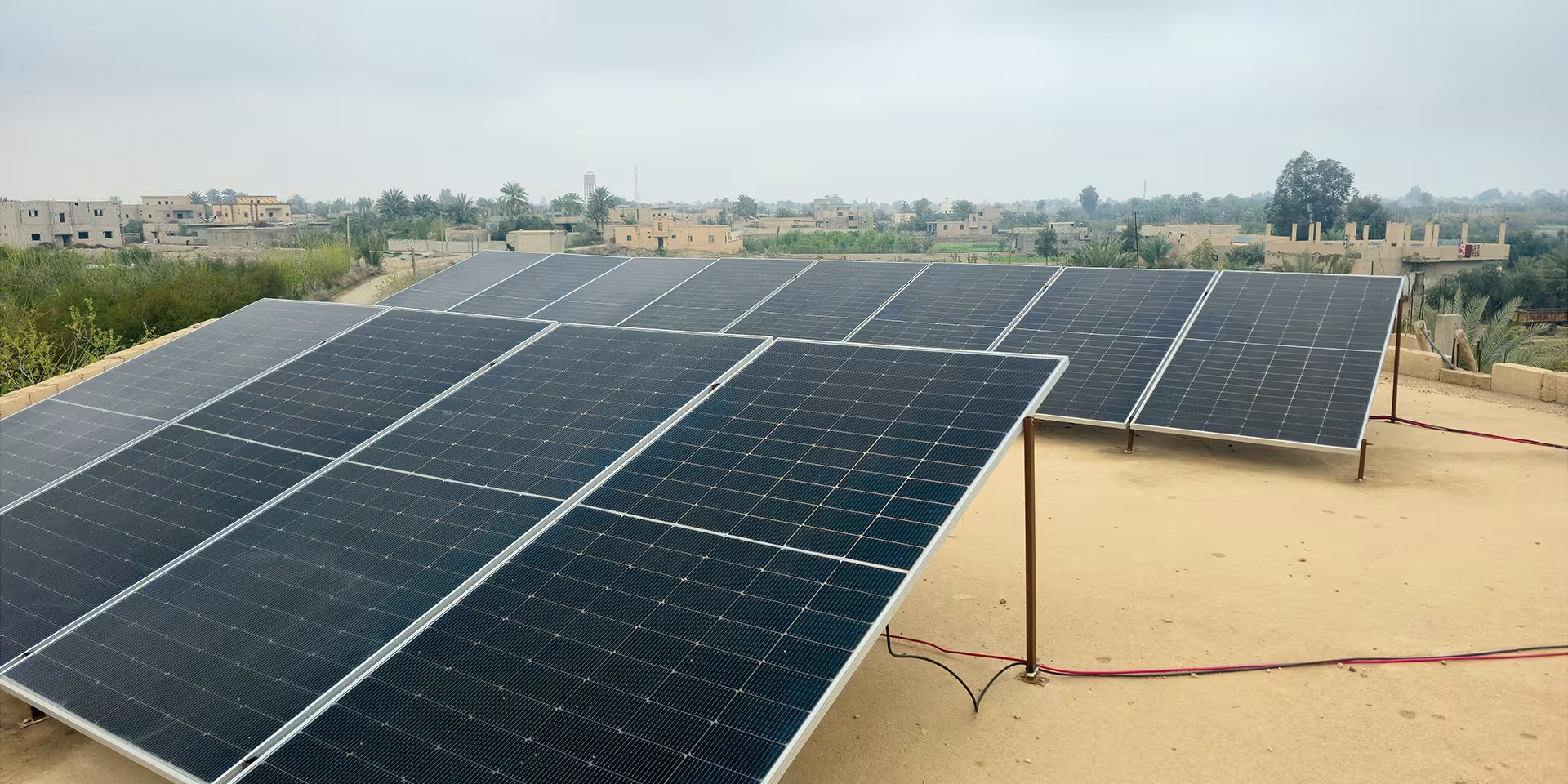
Solar Power System Installation (November 2025)
In this photograph, technicians are installing a solar power system that will significantly transform the daily operations of small food-processing businesses in eastern Deir ez-Zor. For years, these businesses have relied on expensive and unreliable diesel generators, limiting productivity and increasing operational risks. With the introduction of solar energy—now covering most of their working hours—producers, many of them women, can process pomegranates, dates and other fruits more efficiently, safely and sustainably. As part of the project’s infrastructure support, the solar system provides stable, affordable and environmentally friendly electricity, which is essential for operating mixing tanks, cold-storage facilities and other equipment used to process pomegranates, dates and fruit molasses. This intervention strengthens local value chains, improves production quality and supports the recovery and growth of small-scale producers in one of Syria’s most heavily affected regions.
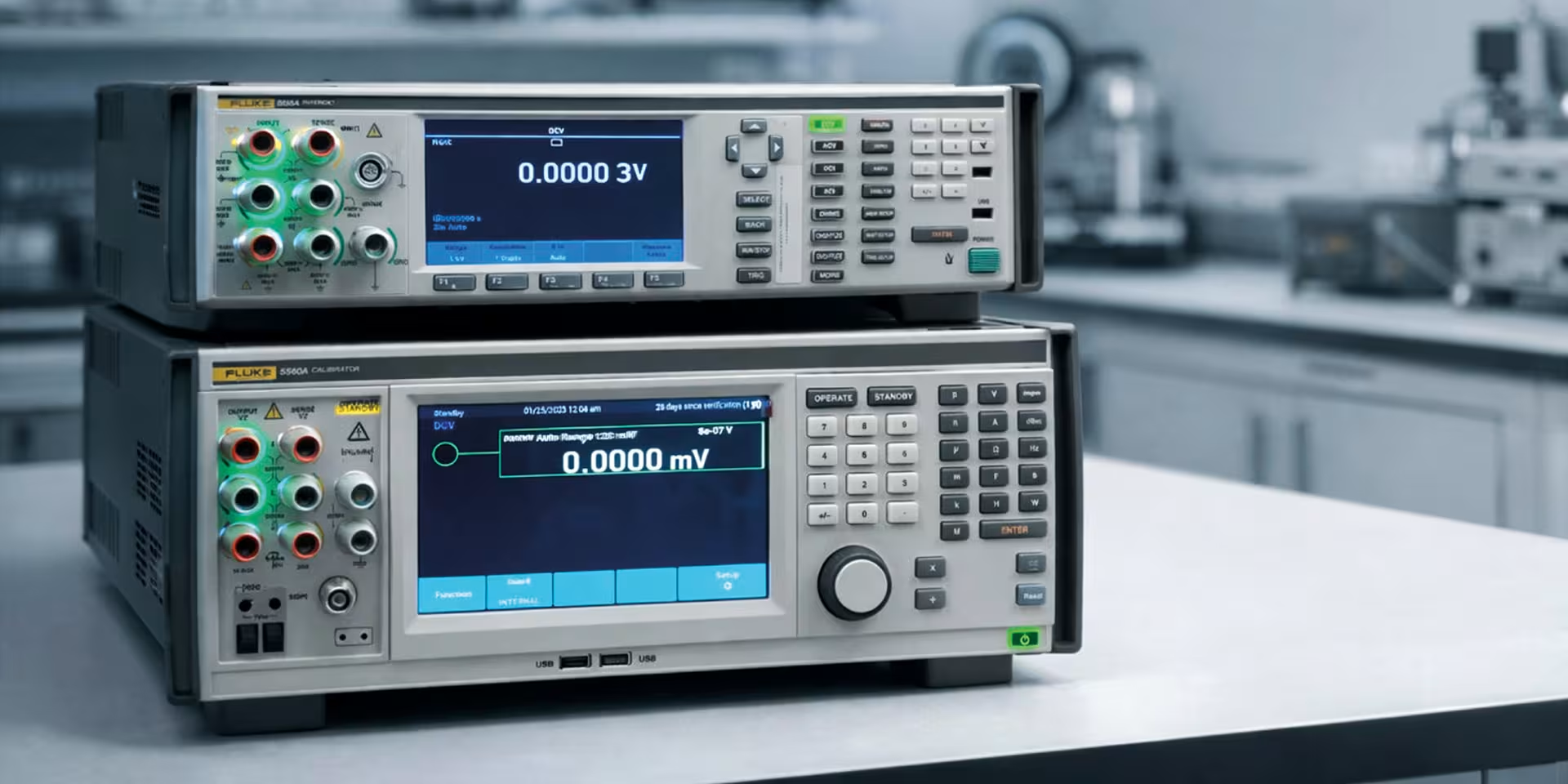
Building Syria’s Metrology Backbone (14 March 2026)
This photograph shows a high-precision electrical calibration laboratory used for metrological applications and measurement standards. Initiatives such as “Mizan,” led by members of the Syrian diaspora, aim to transfer technical expertise in metrology, quality infrastructure and industrial standards to support the rebuilding of Syria’s economy and institutions. By strengthening technical capacities and quality systems, such initiatives contribute to the foundations needed for a more reliable, resilient and competitive economy. They also demonstrate how expertise within the Syrian diaspora can be connected with local needs to support long-term institutional and economic recovery.
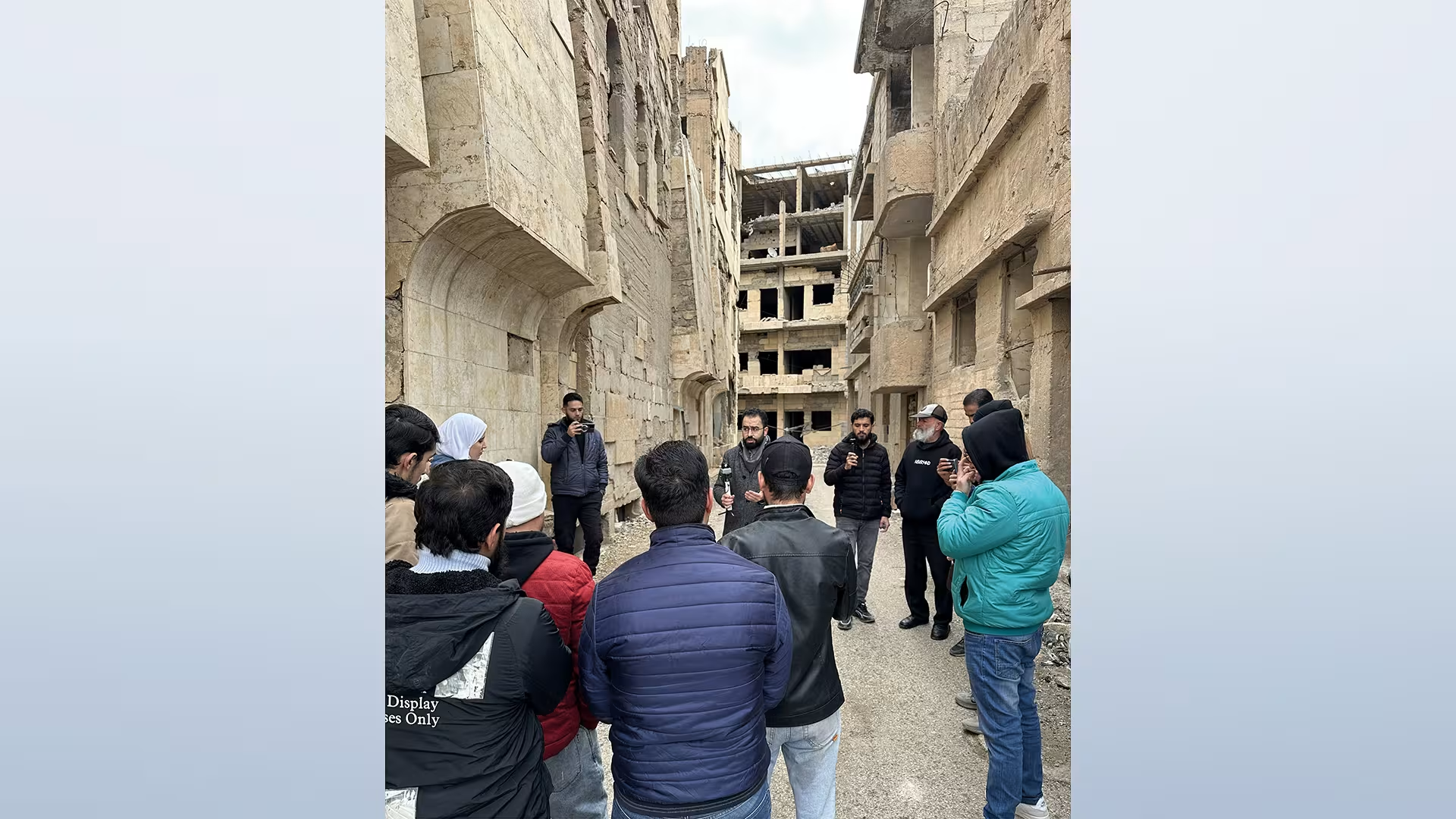
From Darmstadt to Deir ez-Zor: Science for Reconstruction (29 December 2025)
This photograph was taken in front of the Armenian Church in Deir ez-Zor during a scientific field trip for civil engineering students, held on the sidelines of the “Bridges of Knowledge” forum. Led by Dr Samer Karam, the students received both theoretical and practical training in 3D imaging and laser scanning, using equipment from the laboratory of TU Darmstadt. The moment reflects the potential of science and education to contribute to Syria’s reconstruction while helping preserve its architectural heritage. The field trip was organised by the Syrian Scientific Council Initiative in cooperation with the Faculty of Civil Engineering – Raqqa Branch, with support from Al-Furat University.
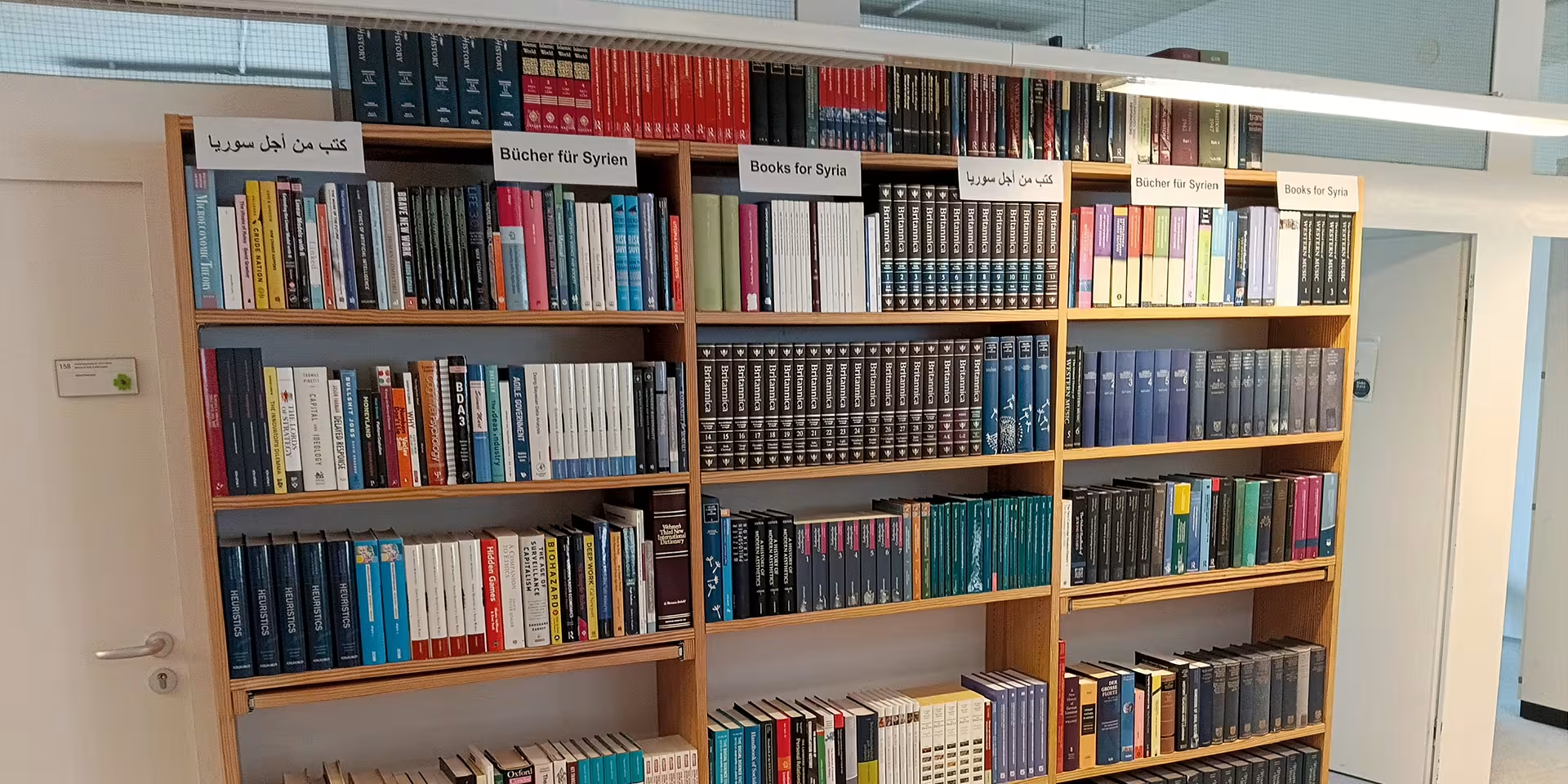
A Book Bridge Between German and Syrian Universities (March 2026)
This photograph shows a selection of the books collected as part of the Syrian Academic Libraries Initiative (SALI), an initiative of the German-Syrian Research Foundation (DSFG) that supports university libraries in Syria. The books shown here were donated by the Max Planck Institute for Human Development in Berlin. In the coming days, volunteers will collect, catalogue and prepare the books for shipment to Syria. Previous SALI activities have already enabled donated books from Germany to reach Syrian university libraries. Step by step, the initiative is building a bridge between German and Syrian universities, helping to restore and expand access to academic knowledge and resources.
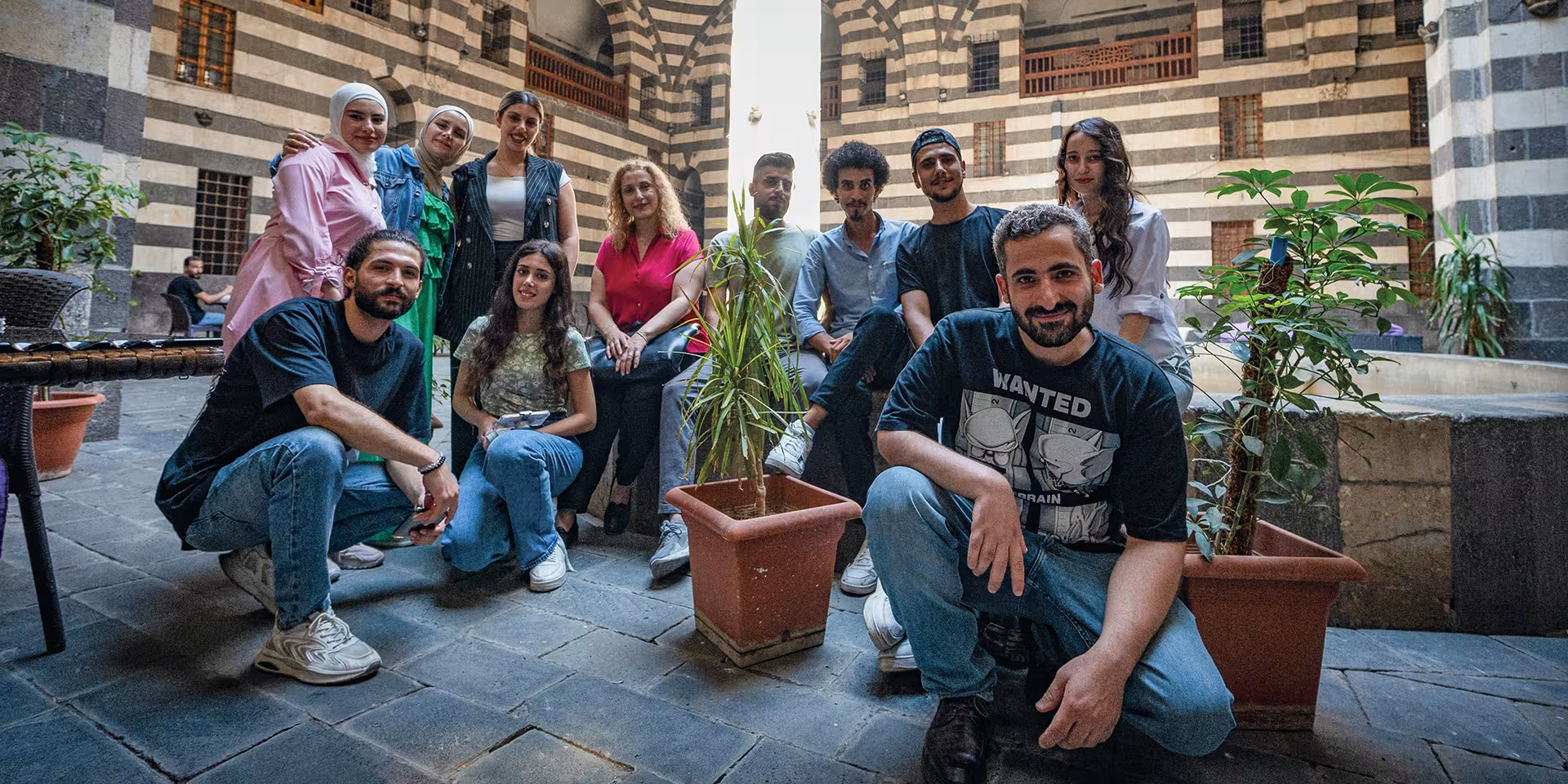
Building Bridges Through Education: Journalism Summer School in Damascus (29 July 2025)
This photograph shows participants of the 2025 Journalism and Content Creation Summer School in Damascus, organised by the Amal News platform as part of German-Syrian cooperation. Nine of the fifteen students are pictured alongside three instructors from Germany who supported the training programme. On this day, the participants worked in small teams to produce audiovisual reports. Two groups filmed at the historic Khan Asaad Basha, creating stories about history and cultural heritage. The instructors provided practical guidance throughout the process, supporting the participants with planning, camera work and editing while introducing key principles of professional journalism.
The Summer School represents a vision of Syria’s future shaped by education, cross-border cooperation and independent journalism. It demonstrates how knowledge exchange and practical training can empower a new generation to tell their own stories and contribute to rebuilding society.
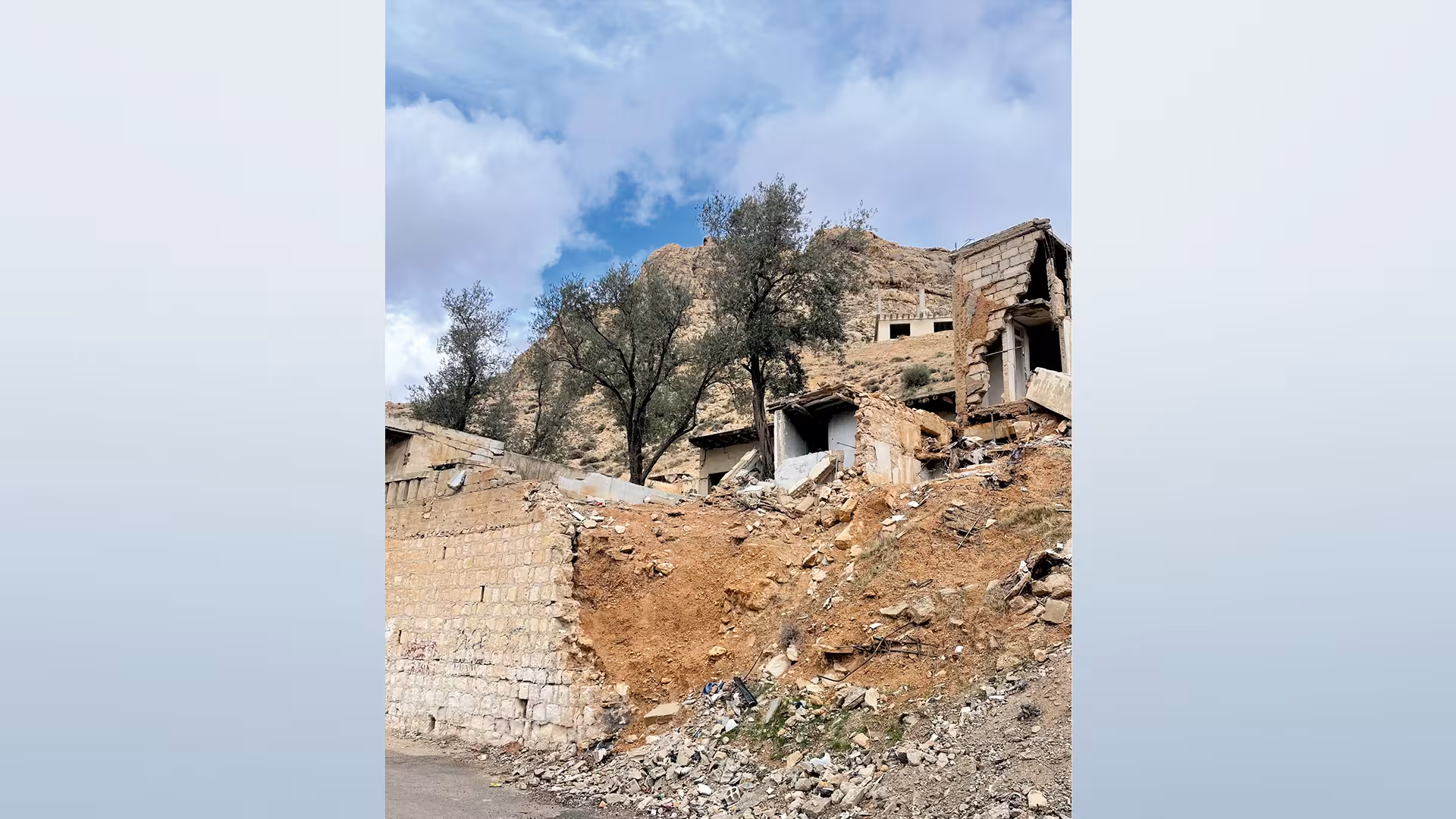
A Tale of Resilient Olive Trees (February 2025)
Our summer house near Damascus was built by my great-grandfather. Today, the destruction is unmistakable: remnants of war are scattered throughout the area, posing an ongoing threat to life, while prolonged drought has stripped away much of the greenery that once defined this village. The vineyard is gone, but our three olive trees still stand. They bear witness to what this place has endured, to resilience in the face of destruction, and to the possibility of healing. Their survival offers a quiet reminder that even after profound loss, life can endure—and hope can take root again.
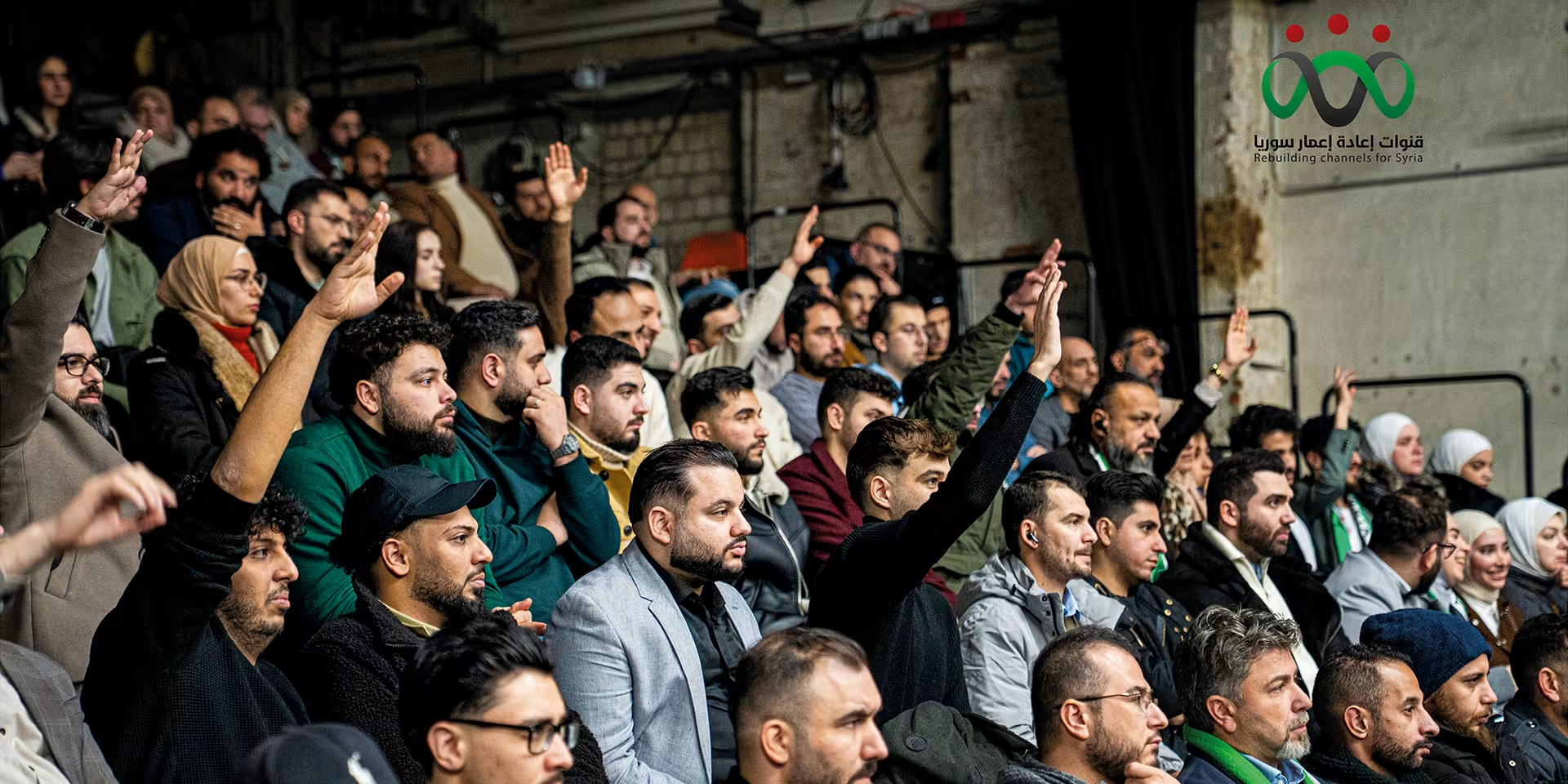
Between Revolutionary Journalism and Reconstruction: A Syrian Dialogue in Hamburg on the Role of Media and the Diaspora (4 January 2026)
The photograph shows an engaged audience of Syrian media professionals, activists and members of the diaspora in Hamburg actively participating in a discussion with leading journalists Hadi Al-Abdullah and Mohamad Al-Faisal. The moment reflects a sense of hope: people who live between two countries are taking responsibility, sharing experiences and working together to shape perspectives for Syria’s reconstruction. The raised hands symbolise participation, dialogue and the determination to be heard. The gathering was facilitated by the German-Syrian initiative “Wiederaufbaukanäle Syriens e. V.”, which brings together media professionals, experts and members of civil society, helping to build bridges between Germany and Syria.
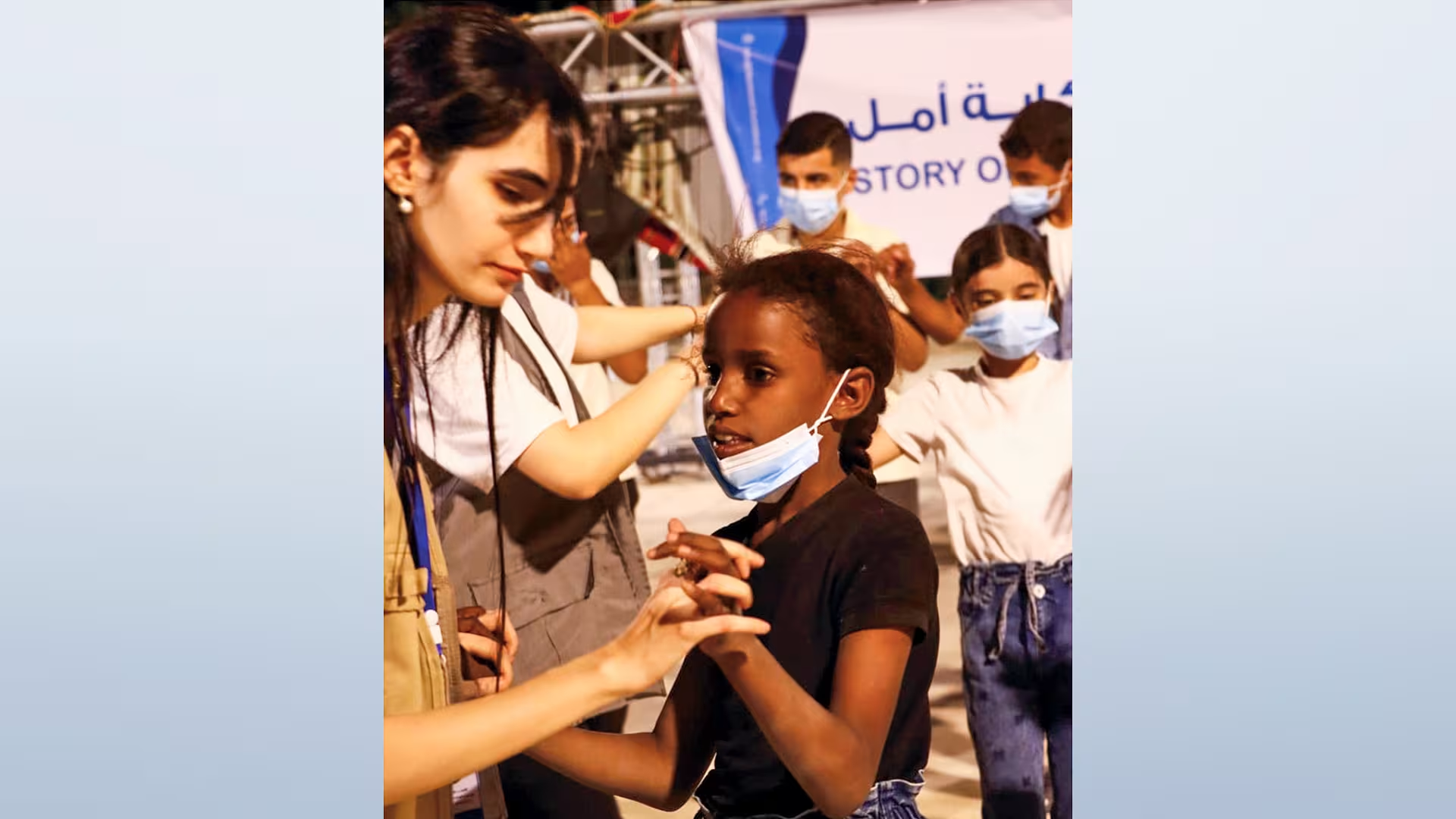
Cancer Warriors: True Heroes (1 March 2026)
Children living with cancer need our support now more than ever. Their participation in activities, despite their young age and the challenges they face, reminds us of the power of compassion and solidarity. Society, together with governmental and non-governmental organisations, must work hand in hand to protect and support these children—particularly in conflict-affected areas. They deserve hope, moments of joy and safe environments where they feel cared for, valued and supported. Every act of support can make a meaningful difference in their lives. It gives children strength and confidence, reminding them that they are not alone and that their communities will stand by them through every challenge and hardship.
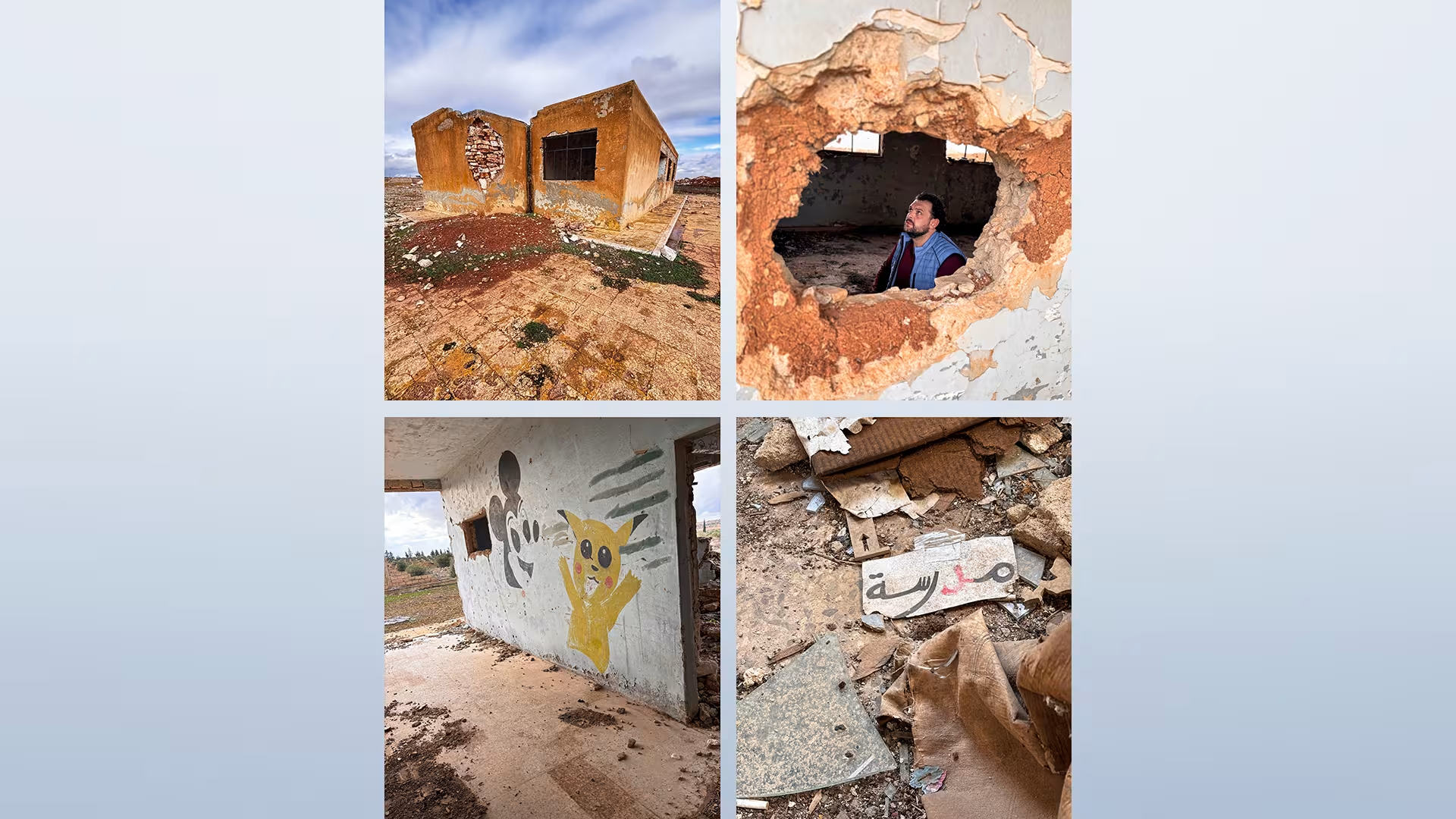
Amid the Ruins: “Where Walls Fall, Schools Must Rise!” (14 February 2026)
This series of photographs shows a destroyed primary school near Aleppo/Al-Bab, where I am standing among the ruins. Amid the rubble and crumbling walls, drawings of familiar animated characters remain—a quiet testament to the childhood that once unfolded here. When I discovered the Arabic word for “school” written on the ground, the site became more than a remnant of destruction. It became an unexpected moment of hope. Despite the devastation, the idea of education endures. Supported by initiatives such as Hasene International e.V., this space symbolises the possibility of rebuilding Syria’s education system—rooted in memory and responsibility, and guided by the future of its children.
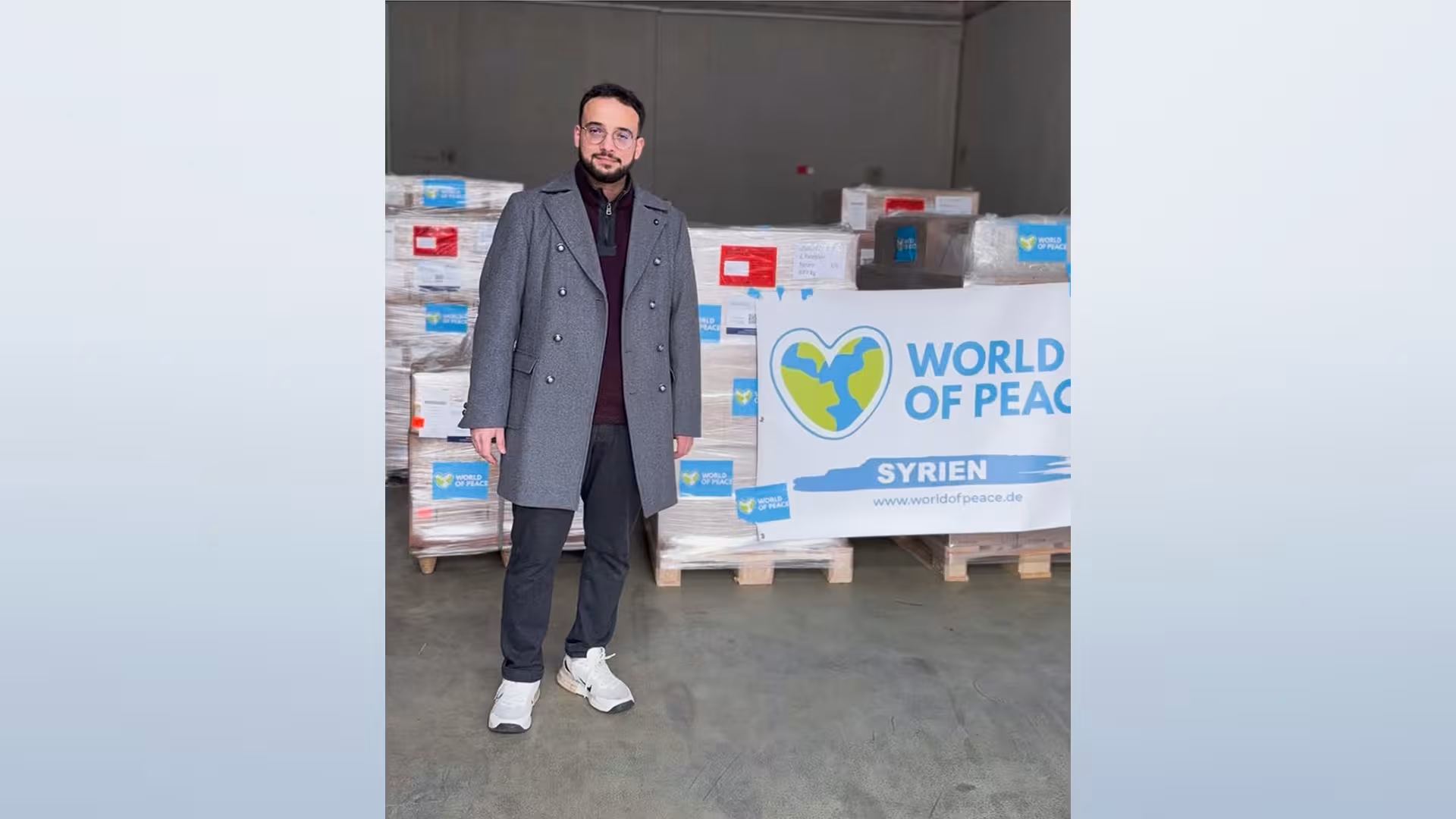
WOP Mission: Supporting Syria’s Healthcare System (26 November 2025)
The photograph shows Malek Alkoairi, Project Manager for the Syria Department at World of Peace (WOP), standing in front of pallets of medical supplies prepared for shipment to Syria. WOP is a Germany-based humanitarian organisation focusing on relief efforts and sustainable projects in crisis-affected regions. Its work includes supporting Syria’s healthcare system through targeted deliveries of medical supplies and close cooperation with local partners. The photograph represents practical, needs-based assistance and the hope of making a tangible difference to healthcare provision on the ground.
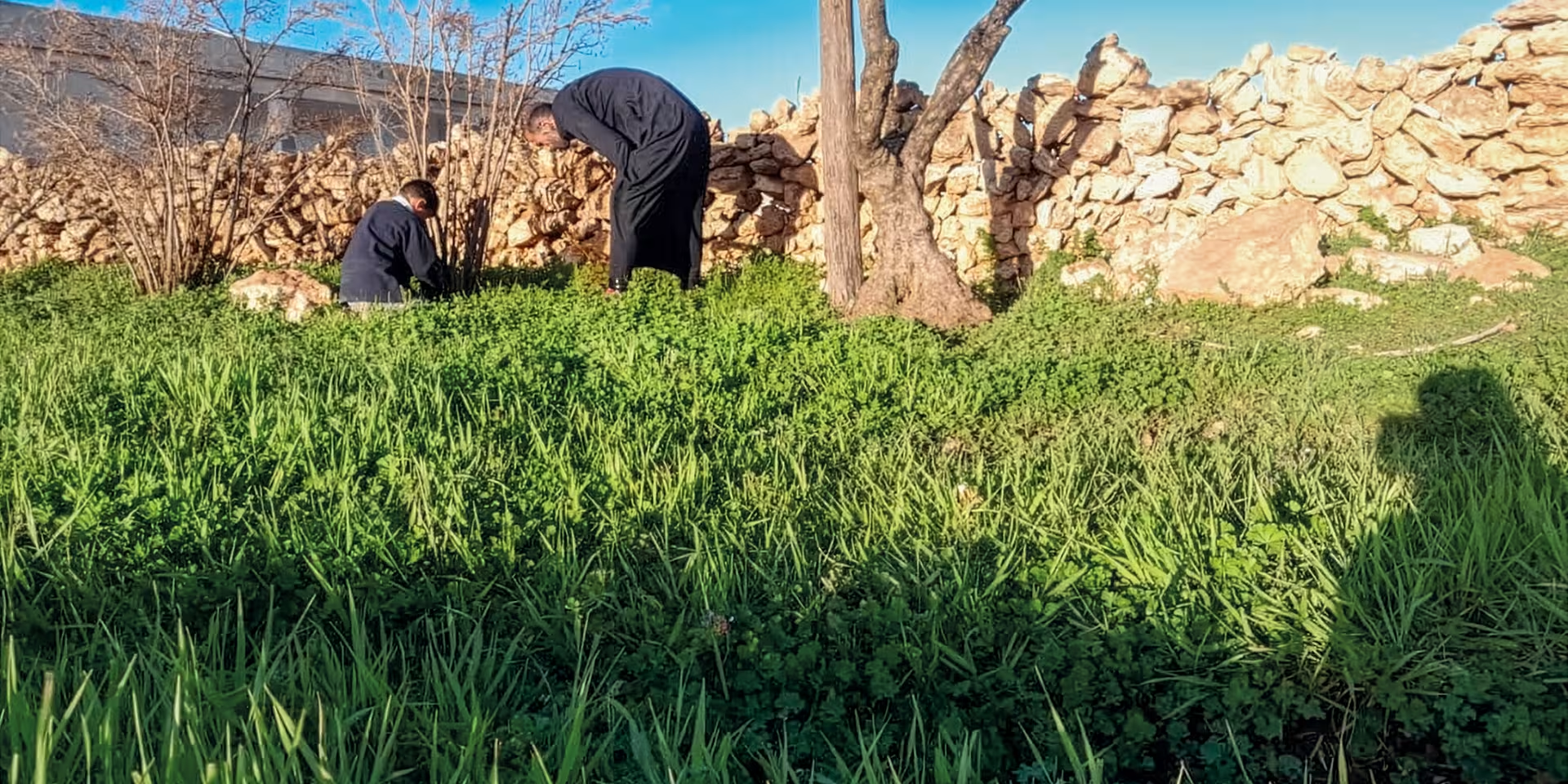
Rebuilding Agricultural Livelihoods in the Bedouin Region (2025)
In the foreground is a newly cultivated small field. Before the rise of ISIS, the area was home to many hectares of grain and vegetable production. Through our agricultural project, we aim to restore this essential foundation of local livelihoods, alongside small-scale livestock farming, so that Bedouin families increasingly returning to their tribal lands can once again provide for themselves and regain greater self-sufficiency. In the background, a newly planted olive grove shows a father and son planting a young olive tree. The sale of olives was once a major source of income, and the olive groves were among the first agricultural assets to be destroyed. Restoring them to their pre-war scale will require several thousand new olive trees.
The challenges extend beyond replanting. The soil has been depleted, while insufficient rainfall in recent years has severely affected agricultural productivity. So far, newly planted areas have produced only around 5% of their former yields, highlighting the need for additional measures to restore soil quality and agricultural resilience. Recent severe flooding caused by persistent heavy rainfall and overflowing rivers has washed away parts of the land and caused further damage. These conditions underline how fragile agricultural recovery remains—and how essential long-term investment is to restoring sustainable livelihoods in the region.
Contacting the platform’s secretariat
The platform ‘A New Beginning for Syria’ thrives on dialogue and networking among its members. Please do not hesitate to get in touch with the platform’s secretariat if you have any questions or suggestions or wish to contribute your experience and expertise.
We look forward to hearing from you.